TRX PRO4 Suspension Trainer

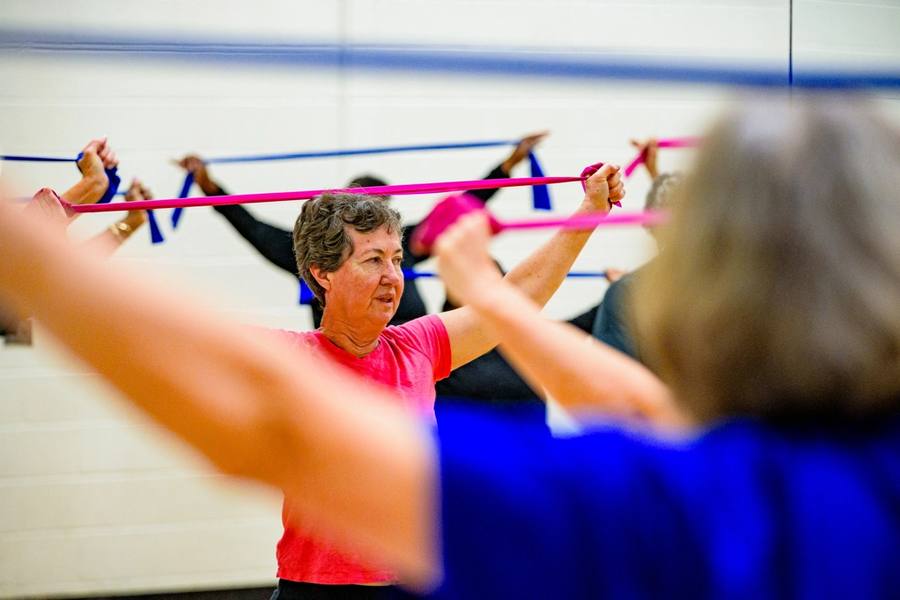
Image illustrative (photo de stock) ; ce n'est pas le produit exact.
Bodyweight At Adjustable Angles
A suspension trainer is two adjustable straps from a single anchor point, and the mechanism it exploits is angle. The further your feet are from directly under the anchor, the more of your bodyweight the exercise loads.
That gives infinitely variable difficulty without any weights. A row performed nearly upright is easy; the same row with your body close to horizontal is hard, and the progression between them is continuous rather than stepped.
For pulling movements in particular that is genuinely valuable, because rows and face pulls are what most people lack at home and both need something to pull against. A suspension trainer provides that from a door frame.
Where It Excels And Where It Cannot Help
Pulling, core and single-leg stability work are where it is strongest. Rows, fallouts, pikes, planks with feet suspended, split squats with a rear foot in a strap — all of these are difficult to load well at home without equipment and straightforward here.
It cannot meaningfully load your legs for squatting. Bodyweight is bodyweight, and while you can make a squat harder by making it single-legged or unstable, you cannot add resistance the way a barbell does.
That is the honest limit: a suspension trainer is an excellent upper body and core tool and a poor substitute for loaded lower body training.
Anchoring Is The Thing To Get Right
It comes with a door anchor, which works on a door that opens away from you and should be used with the door closed and ideally locked. A door that can be opened while you are loading the anchor is the obvious failure mode.
Beam anchors, ceiling mounts and a strap for looping round a tree or a pull-up bar all work, and the anchor is the part that determines whether the setup is safe rather than the trainer itself.
The PRO4 adds a locking cam that holds strap length precisely, which matters because straps that creep during a set change the difficulty mid-rep. Cheaper trainers frequently slip, and it is the clearest functional difference.
Against The Alternatives
Against gymnastic rings, rings rotate freely and allow dips, muscle-ups and more advanced gymnastic work; a suspension trainer has a fixed strap arrangement and is easier to set up and adjust.
Against resistance bands, the trainer uses bodyweight at angles and the bands add external tension; they complement rather than replace each other.
Against a full gym, this does not load legs and takes a bag rather than a room.
Who Should Not Buy It
Anyone whose main goal is lower body strength should buy a barbell and plates, since bodyweight cannot load a squat properly.
Anyone without a solid anchor point should solve that first, as the anchor determines safety and a door anchor needs a suitable door.
Anyone wanting to progress to advanced gymnastic work should buy rings, which rotate and allow movements a fixed strap does not.
The Verdict
An excellent portable tool for pulling and core work, with continuous difficulty adjustment by angle and a locking cam that holds strap length properly.
It cannot load legs meaningfully, and the anchor rather than the trainer is what determines whether the setup is safe.
Use it for the rows and core work most home setups lack, and buy a barbell for anything that needs real load.
En un coup d'œil
Avantages
- Continuous difficulty adjustment by changing body angle
- Provides the pulling movements most home setups lack
- Locking cam holds strap length without creeping mid-set
- Packs into a bag; works from a door, beam or bar
Inconvénients
- Cannot meaningfully load the legs for squatting
- Requires a genuinely solid anchor point
- Door anchor needs a door that opens away and stays closed
- Fixed straps cannot do rotating gymnastic work
Questions fréquemment posées
Can I build legs with it?
Only to a point. You can make squats harder by going single-legged or adding instability, and you cannot add external load the way a barbell does. It is an excellent upper body and core tool and a poor substitute for loaded lower body training.
Is the door anchor safe?
On a door that opens away from you, closed and ideally locked, yes. The failure mode is obvious — someone opening the door while you are loading it — so a solid beam or ceiling anchor is better if you have one. The anchor determines safety, not the trainer.
TRX or gymnastic rings?
Rings rotate, which allows dips, muscle-ups and more advanced gymnastic progressions. A suspension trainer is quicker to set up and adjust and better for rows and core work. Rings have a higher ceiling; this is easier to use.
Spécifications
| Type | Adjustable suspension trainer |
| Adjustment | Locking cam |
| Difficulty | Varies with body angle |
| Anchors | Door, beam, bar, tree strap |
| Strongest for | Pulling, core, single-leg stability |
| Cannot | Load legs with external resistance |
| Portability | Packs into a bag |
| Rotation | None; fixed straps |
Résumé
Provides the rows and core work most home setups lack, with continuous angle-based progression. It cannot load legs — and the anchor is what makes it safe.
Vérifier le prix sur Amazon